The MXene in LEO (MXene Material and Wearable Device Experiments in Low-Earth Orbit Space Habitat) experiment was one of thirteen scientific investigations carried out as part of IGNIS – Poland’s first technological and scientific mission to the International Space Station (ISS). Developed by a research team from the Faculty of Space Technologies at AGH University of Krakow, the project aimedto investigate how advanced MXene nanomaterials behave under microgravity conditions and to assess their potential for future astronaut health-monitoring systems.
The experiment was successfully conducted aboard the ISS by Dr Sławosz Uznański-Wiśniewski, ESA Project Astronaut. It marked the first-ever test of MXene materials in space, providing uniqueinsights into their stability and their potential applications in next-generation space technologies.
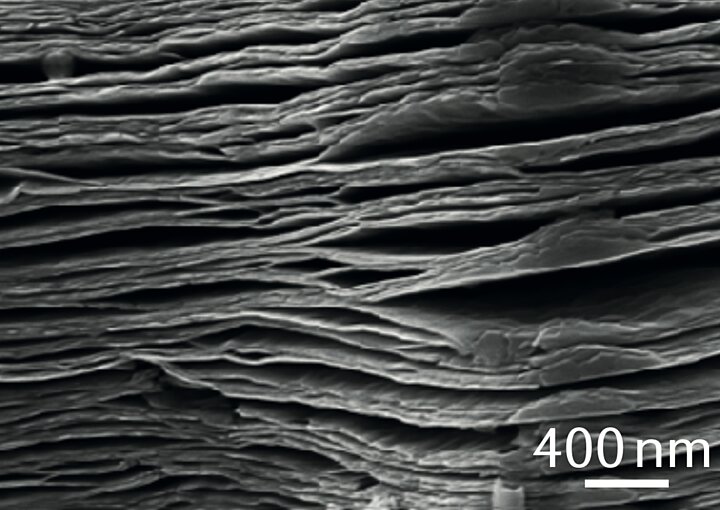
MXene up close. The image is from “2D Metal Carbides and Nitrides (MXenes) for Energy Storage” by Babak Anasori, Maria R. Lukatskaya, and Yury Gogotsi, published by Springer Nature.
MXenes are a family of advanced two-dimensional nanomaterials known for their exceptional electrical conductivity, mechanical flexibility, and unique surface properties. Thanks to thesecharacteristics, they are considered highly promising for next-generation sensors, wearable electronics, and biomedical monitoring systems.
For this project, the AGH research team used titanium carbide (Ti₃C₂Tₓ) MXenes, which have been developed and studied in AGH laboratories since 2018. One of the experiment's primary objectiveswas to determine whether these materials retain their functional properties after exposure to the harsh environment of low Earth orbit, including microgravity and space radiation.
The second part of the experiment focused on testing an innovative wearable wristband equipped with MXene-based sensors. The device was designed as a future solution for continuously monitoring astronauts' health during long-duration space missions.
The wristbands measured heart rate and detected wrist movements. During the experiment, Dr Sławosz Uznański-Wiśniewski performed a predefined sequence of wrist movements to evaluate sensor performance in microgravity. Six wristbands were tested, with each device undergoing two independent measurement sessions.
An important aspect of the project was the use of bacterial cellulose as the flexible substrate for the wearable device. This sustainable biomaterial could become particularly valuable during futurelong-term space missions, where the ability to produce materials locally and reduce payload mass will be essential.
The wristband's design was further refined with a strong focus on ergonomics and usability in space by students from the Faculty of Industrial Design at the Academy of Fine Arts in Kraków under the supervision of Prof. Michał Kracik. As a result, the device was adapted to the unique working conditions of astronauts, allowing it to be put on and operated independently in microgravity. Thiscollaboration demonstrates that the success of modern space technologies relies not only on scientific research and engineering, but also on thoughtful design. For devices intended to operate in space, design is just as important as the underlying technology, ensuring functionality, ergonomics, and ease of use in one of the most demanding environments imaginable.
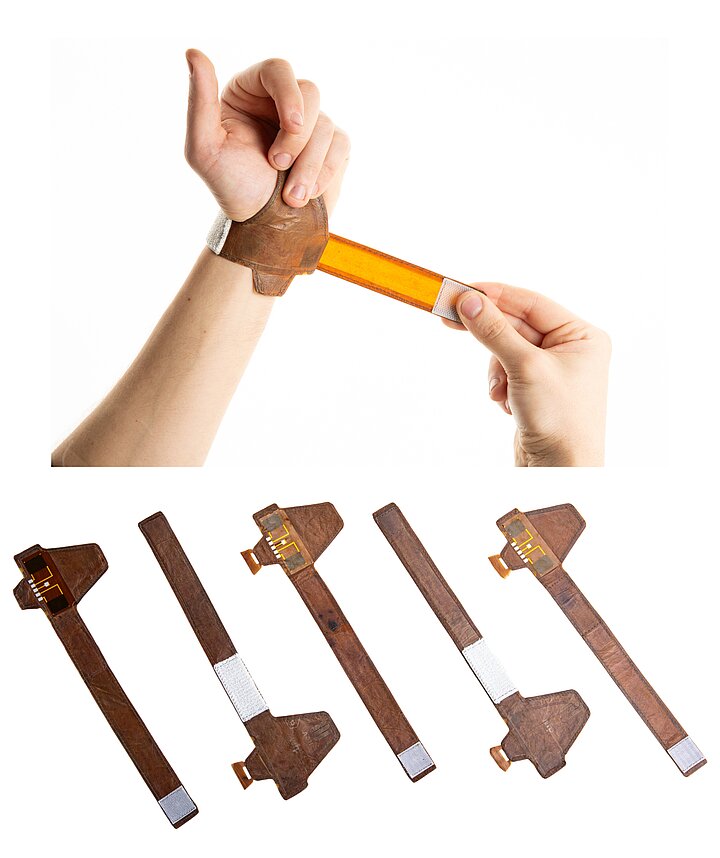
Photos: ASP

Photo: Natalia Bargiel, KSAF
Alongside the experiment conducted aboard the International Space Station, identical control tests were carried out on Earth at the Sensors Lab at the Faculty of Space Technologies at AGH University of Krakow.
Comparing the spaceflight and ground-based results enabled researchers to evaluate the effects of microgravity on both the MXene materials and the wearable sensors. The collected data provide a strong foundation for further research into the use of advanced nanomaterials in space and biomedical technologies.
The MXene in LEO experiment demonstrated a technology that could play an important role in future human space exploration missions, including expeditions to the Moon and Mars. Lightweight, flexible, and highly efficient wearable sensors capable of continuously monitoring astronauts' vital signs could become essential where immediate medical support is unavailable.
The technologies developed within the project also have significant potential for terrestrial applications, including telemedicine, remote patient monitoring, wearable healthcare devices, and intelligentelectronics.
One of the project's outcomes was the filing of a patent application for a biosensor based on MXene nanomaterials. Work is currently underway to further develop and commercialize the technology. The experiment has also contributed to scientific publications and the development of new educational materials for the Space Technologies programme at AGH University of Krakow.

Dr Sławosz Uznański-Wiśniewski na ISS z opaską MXene in LEO
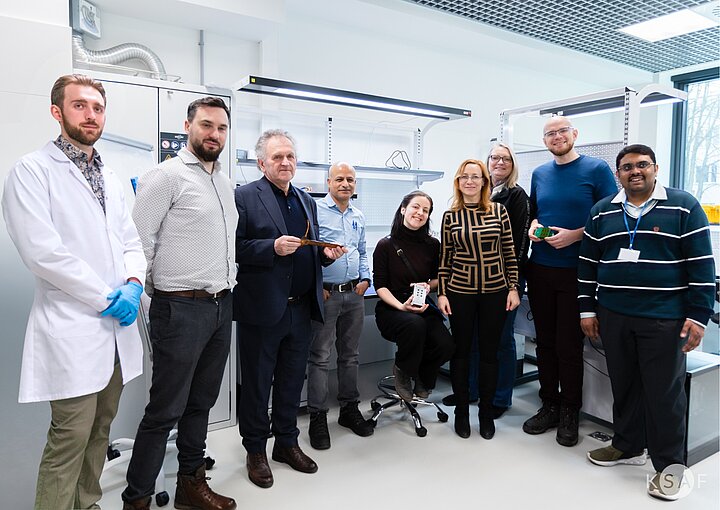
photo: Grzegorz Wojtek, KSAF
The project was coordinated by Dr Shreyas Srivatsa.
The research team included:
The experiment aboard the International Space Station was carried out by Dr Sławosz Uznański-Wiśniewski, ESA Project Astronaut, during the IGNIS mission.

