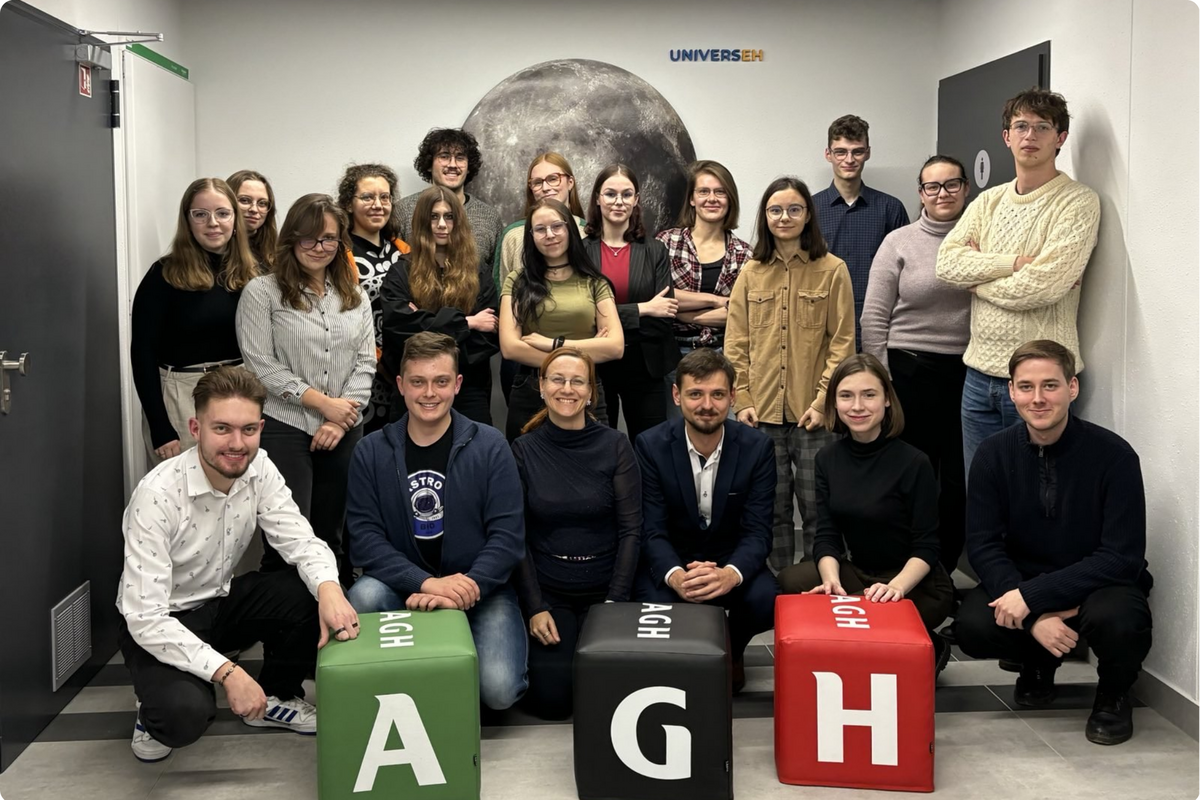
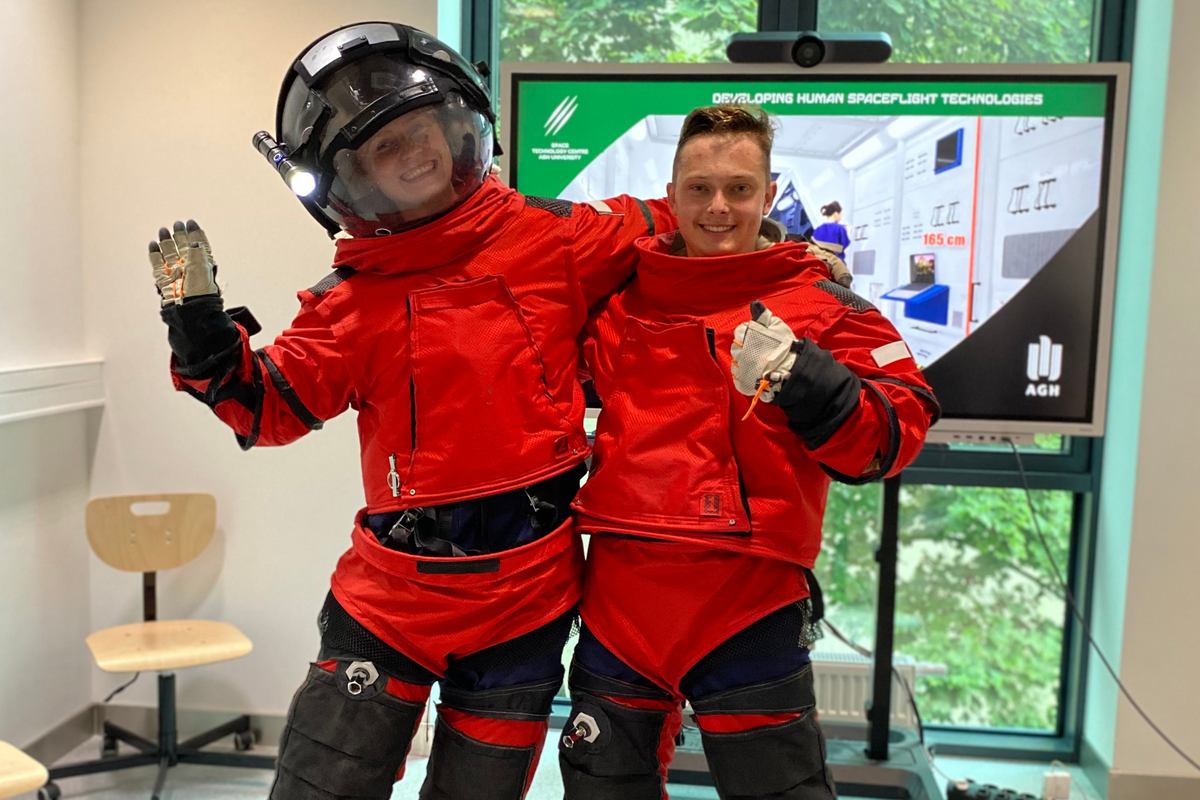
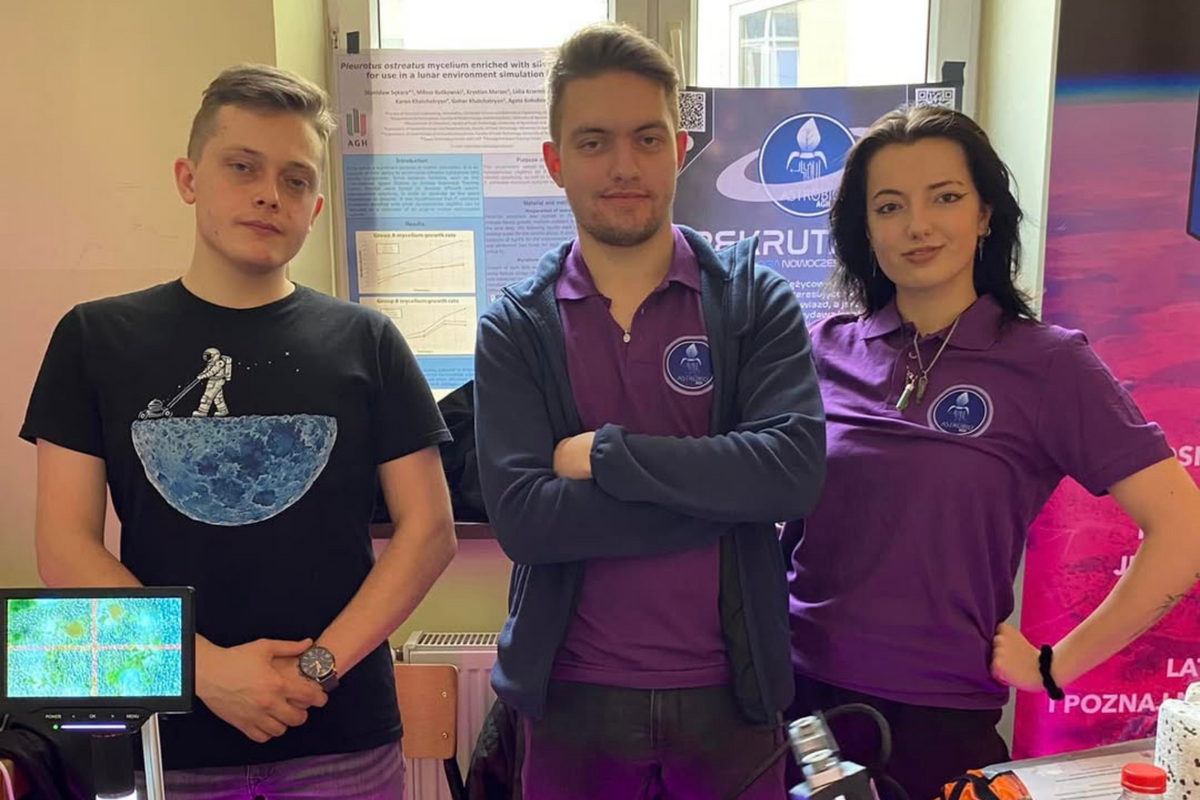
AstroBio AGH is a student research group where we work on a wide range of interdisciplinary projects. Through STRATOQUEST contest, we conduct stratospheric balloon flights; in GRAVITA, we study the behavior of living cells in hypergravity and microgravity; and in ThOR, we design and build payloads for rockets. We also explore how humans adapt to living in isolated environments, such as space habitats.
Our work also includes BIOSIGNATIME, a project focused on measuring subjective time perception in isolation to identify non-invasive biomarkers of circadian rhythms. The project has been accepted by the European Space Agency and is currently being carried out as part of SOLIS100, a 100-day isolation space analog mission at DLR in Cologne. Additionally, through uPURA, we are developing a startup aimed at mapping the world’s microbiome.
Through MICROPURA, our startup initiative, we have developed an IoT sensor integrated with an AI-supported virtual laboratory application to detect microbial content in the air. We have already secured two grants—MyEUSpace and NCBR Akces—and are continuing our work to commercialize the product, as well as to create a “microbial weather” system integrated with Galileo and Copernicus.
Here, we pursue what inspires us while continuously developing our skills and practical experience.